Junior High Non-Fiction

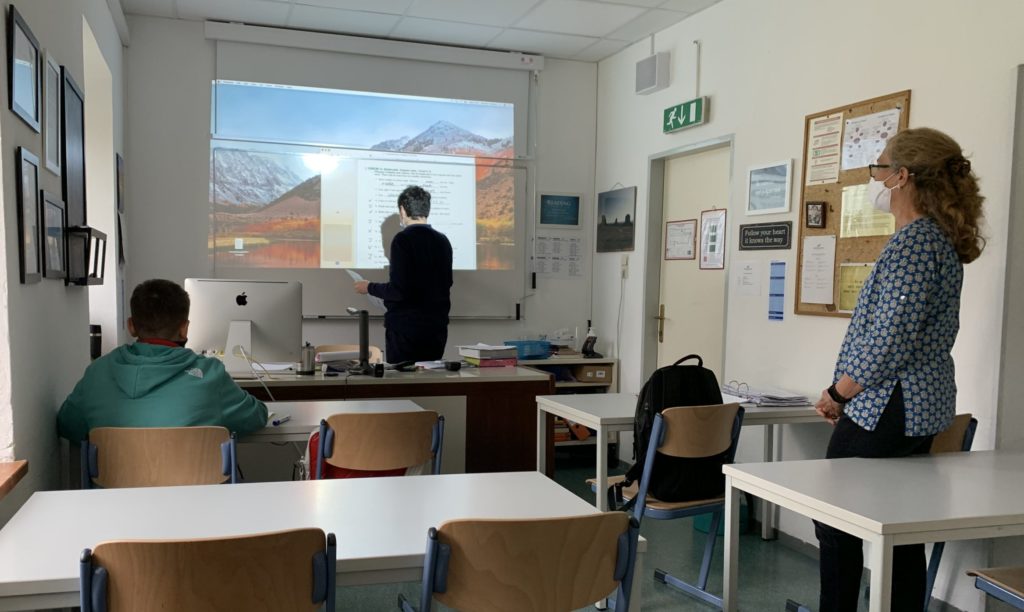
Students in Ms. Cerone’s Junior High Nonfiction class made “How-To” instructional videos on something they want to teach their classmates. Below are a two of the assignments that were turned in.

Grade 9 Math

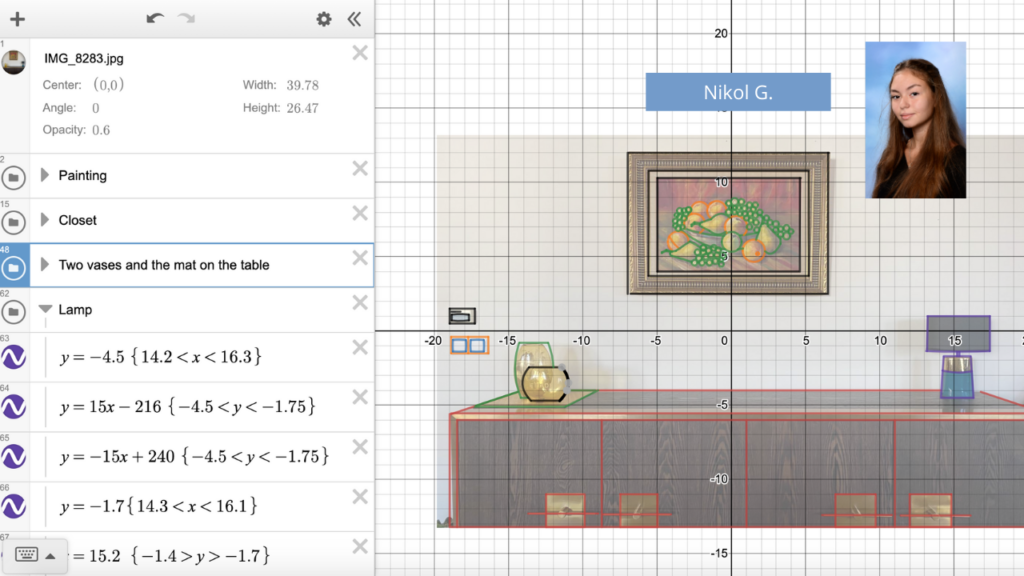
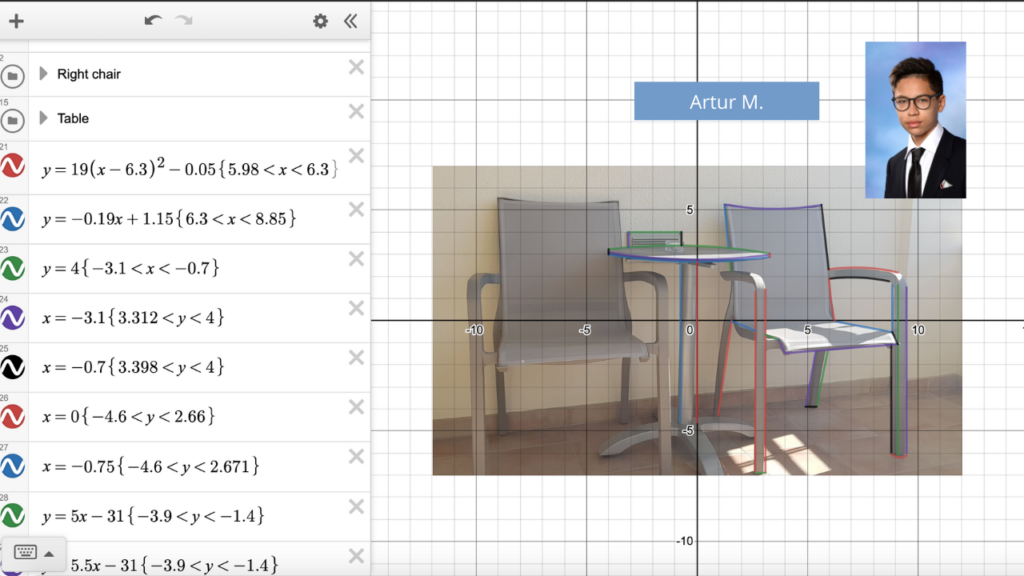
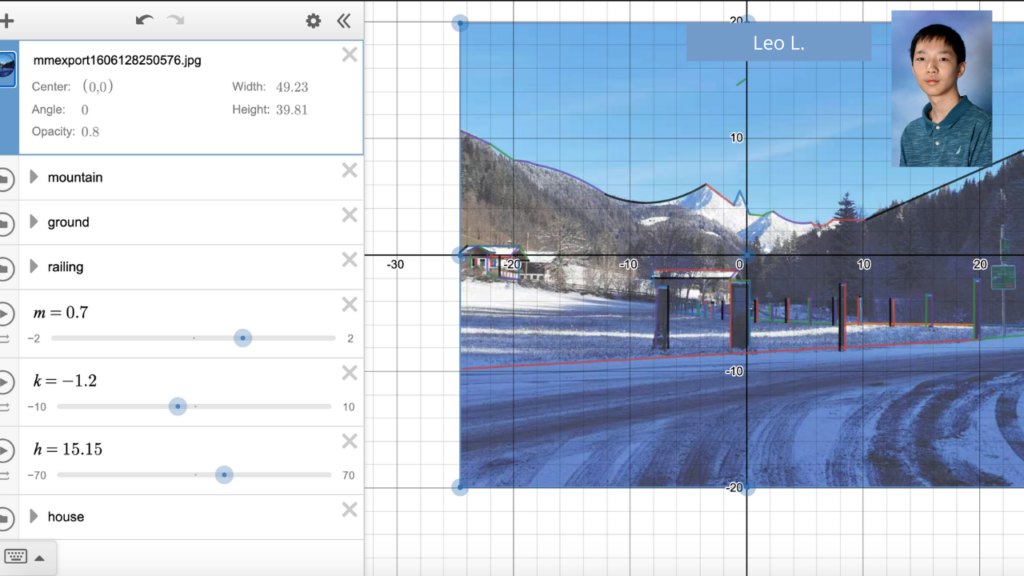
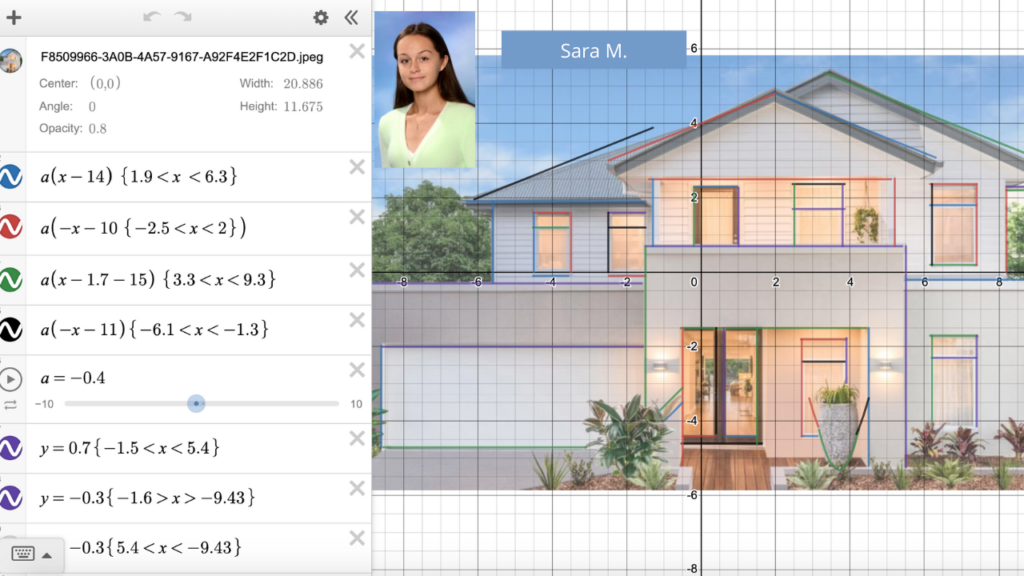
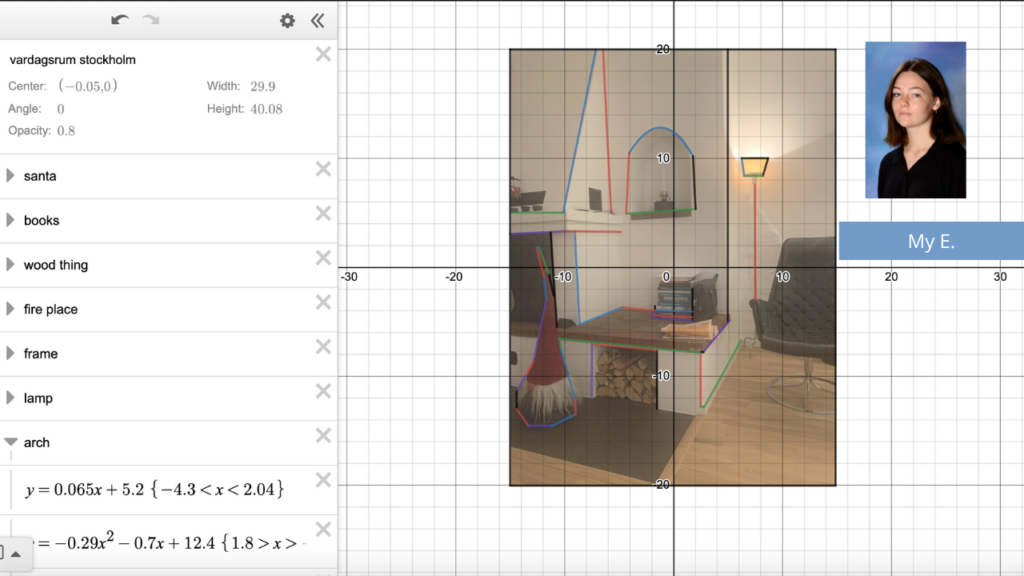
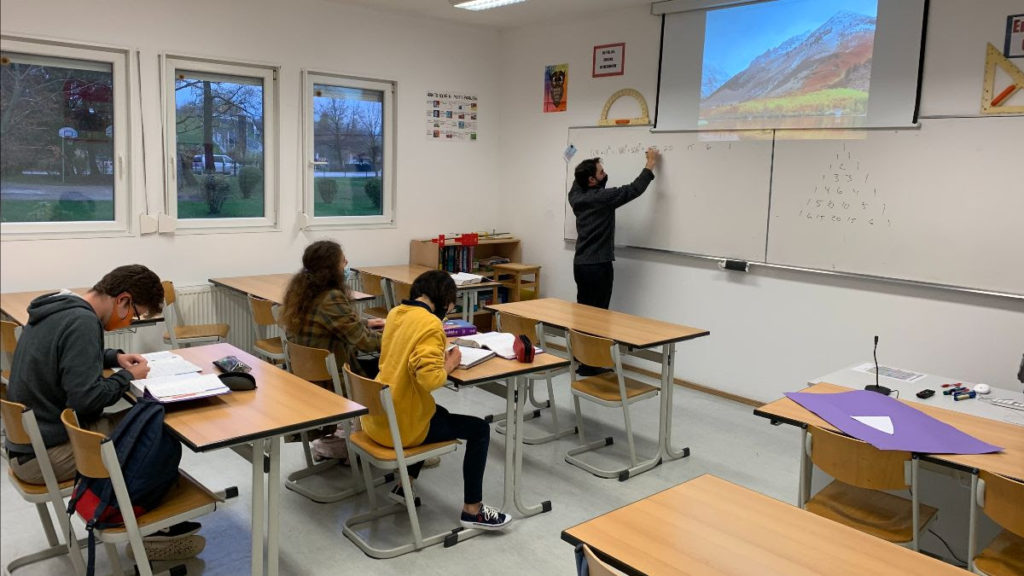
The screenshots below are progress updates from a project in Mr. Lichty’s 9th-grade math class, where students use graphing to re-create a photo they took from around their home. 

Online Math Help with Mr. Lichty

This video is a brief window into Mr. Lichty’s online schooling daily routine including his virtual setup and how he supports his student at home one-on-one.

We would like to recognize the following students for their outstanding academic achievements during the Fall Trimester of the 2020-2021 school year. 

High Honors

All A's and no more than one B

Dimana*
Nikol*
Adam*
Carolina*
Andi*
Claire*
Li-Yu
Gunnar
Valeriya
Helene*
Sonja*
Adel
Aleksandra*
Cristian*
Arina

* signifies high honors with all A’s

Honor Roll

All A's and B's

Barbara
Dany
Ian
Siana
Artur
Vico
Diana
Luisa

Missing: Anna Koz, Yuting X.

Honorable Mention

All A's and B's and no more than one C

My
Sofia
Georgijs
Clara

Distinguished Students

The following Non-Seniors, by successfully fulfilling the academic, community service, and disciplinary qualifications as outlined in the Parent/Student Handbook, are awarded Distinguished Student status:

Barbara
Emma
Dimana*
Nikol*
Dany
Adam*
Carolina*
Andi*
Claire*
Siana
Ustym
Li-Yu
Artur
Georgijs
Vico
Diana
Helene*
Sonja*
Adel
Aleksandra*
Cristian*
Luisa

Missing: Emil S., Yuting X.

* signifies high honors with all A’s

Senior Scholars

The following Seniors, by successfully fulfilling the academic, community service*, and disciplinary qualifications as outlined in the Parent/Student Handbook, are awarded Senior Scholar status:

Ian
Gunnar
Valeriya
Arina

Missing: Anna Koz.


In our first week since switching to online learning from home, students and teachers seemingly picked up right where they left off back in the spring, the last time we were forced to go online. 

Italian

The Italian class had to first translate this story titled ‘Una Stories di Mele’ and then read and record an assigned paragraph from the story. The video below was put together by Andi, one of the students in the class. 

Junior High Science

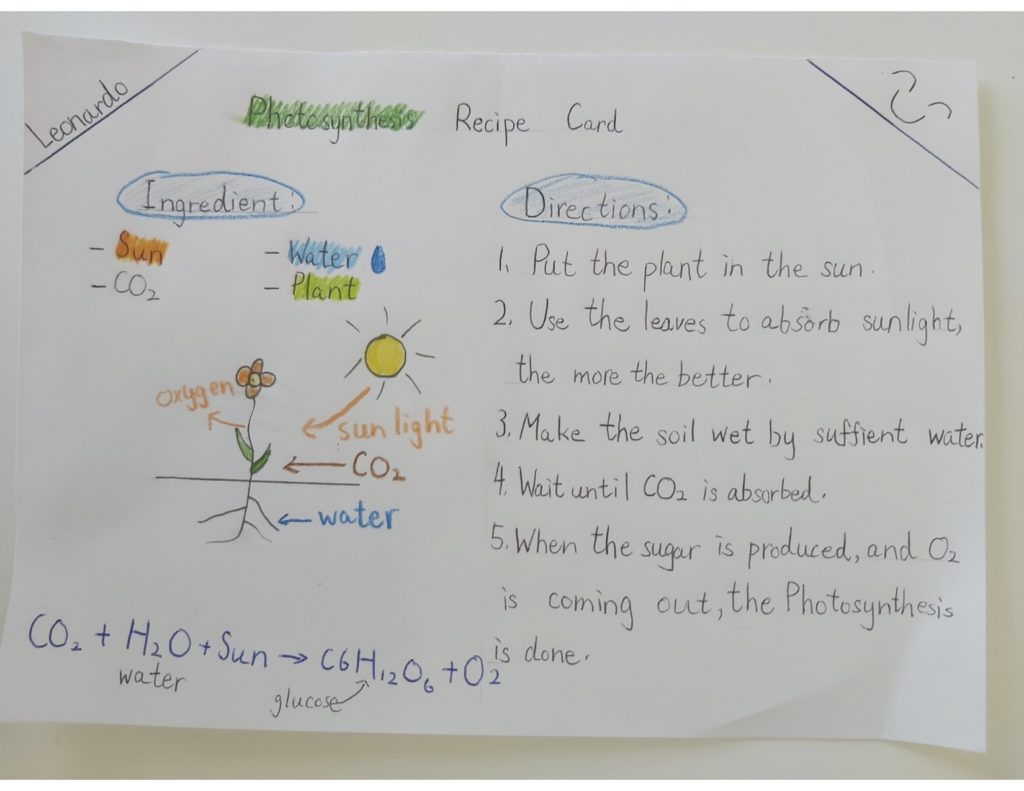
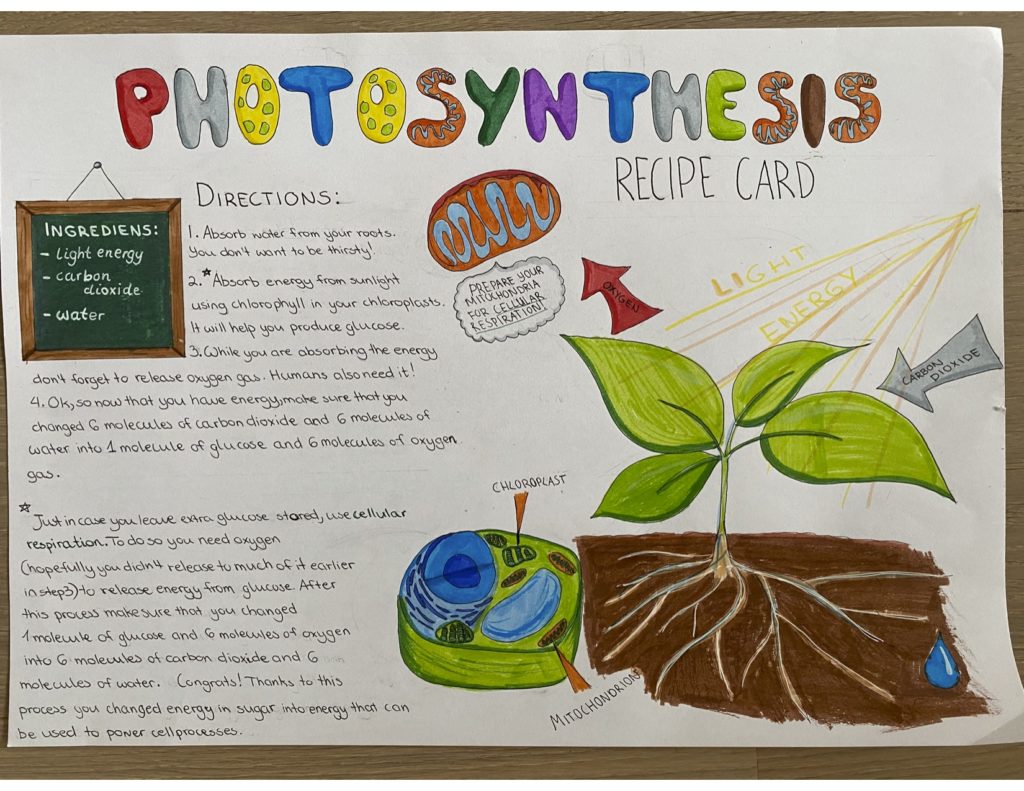
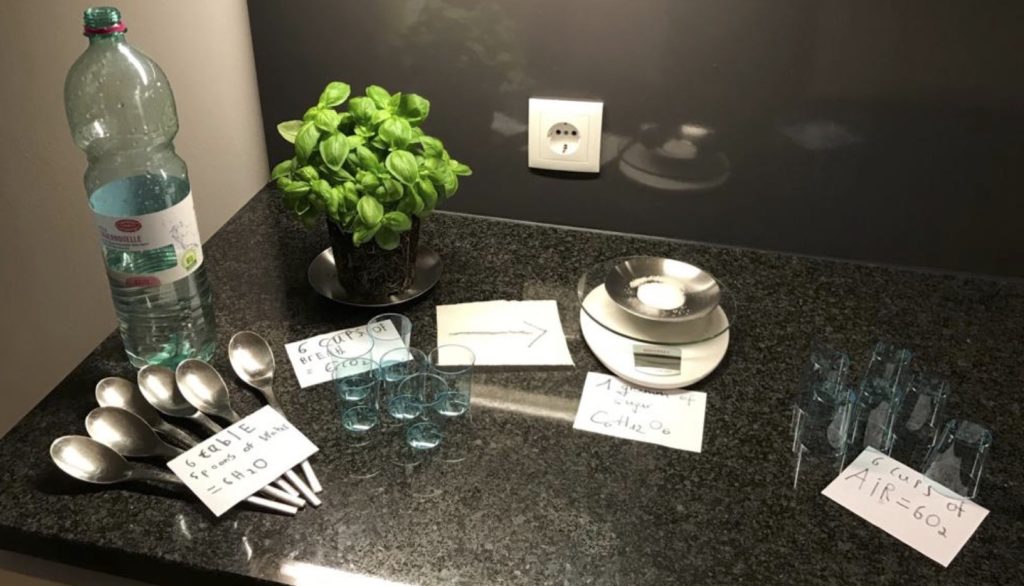
In Junior High Science, students were instructed to make a “Recipe Card” of Photosynthesis.

In Junior High Science, students were instructed to make a “Recipe Card” of Photosynthesis. Your recipe card had to include:

  • The “ingredients” or the items needed for photosynthesis to take place.
  • The “directions” or the process that occurs during photosynthesis
  • A picture that shows what is happening!
  • Creativity! Use ‘recipe’ words!

The photos below are a few of the submissions from students. 

World Geography

This video from Aleksandra on the ‘Three Civilizations of Mexico’ was submitted this week as a World Geography assignment. 

Physical Education

With students now homeschooling, physical education has become even more important due to the amount of time now spent on the computer.

To incentivize students, our instructors put together a P.E. Challenge system, where instructors and even teachers challenge students to complete various physical activities. Students can pick and choose which activities to complete in order to meet their weekly P.E. Challenge requirements. These activities range from strength and endurance training to developing skills in various sports disciplines. 

To view the list of various P.E. challenges go to: www.ais-salzburg.at/pe-challenge

The video below is of two instructors challenging students to an at-home workout and two students accepting and completing those challenges. 

When did you attend Salzburg International Preparatory School (SIPS)? (changed to AIS-Salzburg in the 1990’s)

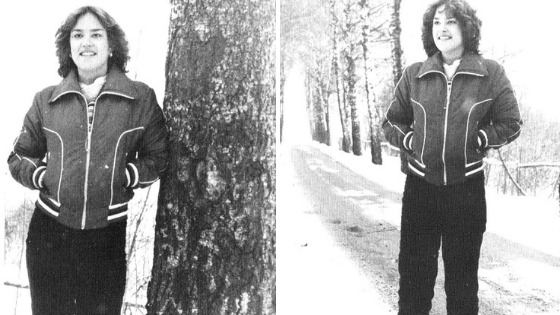
My brother, Mark, and I attended SIPS beginning in January of 1978. I graduated in 1979.


Where did you go to school prior to SIPS?

I went to Parkdale Senior High in Riverdale, Maryland.


What made you decide to study in a private school in Austria? How did you find out about the school? 

My Dad took a position in Riyadh, Saudi Arabia. There were several families we met through his work. The Aanestads were our first contact. Their daughter, Krysti, was attending SIPS and they recommended the school. There were several other students from Riyadh attending that year.


What did you enjoy about going to such a small, international high school? 

I had never been away from home and I was excited to explore the world. I felt a lot more secure doing so with a little supervision and a group of friends. I made friendships that have lasted a lifetime. It was my first exposure to people from other countries and the experience has made a huge difference in my life.


What was the student body nationality make-up back then?

While most students were American, there were quite a few from so many different places. There were students from Canada, Turkey, South Africa, Iraq, England, Germany, and Nigeria to name a few.


How many excursions did you go on in a year and to where? 

We had frequent skiing trips to places like Innsbruck, Kitzbuhel, and Tyrol. We took many trips to Berchtesgaden for movies and concerts. We toured several castles and sites around Austria and went to Munich several times. We travelled to Switzerland and visited Luzern and Zurich. My favorite excursion was a tour through Italy. We spent time in Verona, Florence, Venice, and Pisa. The bus rides were exceptional in that the views from the windows were spectacular and we enjoyed a playlist provided by our resident DJ, Tim Cusac.

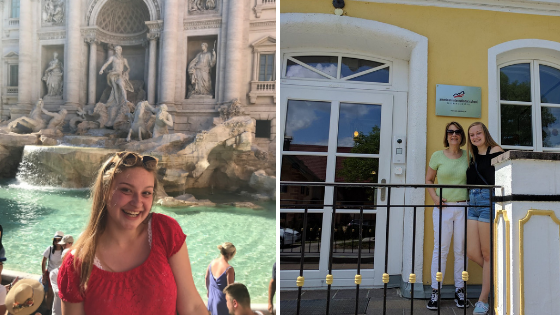
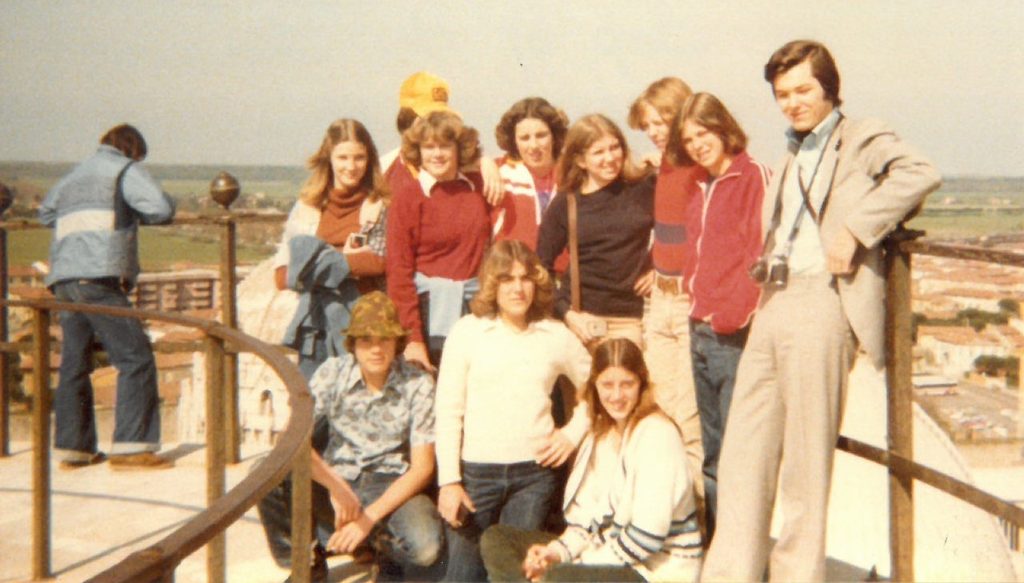
Photo: Diana (bottom right, striped shirt) and SIPS classmates in Pisa, Italy in 1978


Was skiing and team sports a big part of the program?

Skiing was nearly a weekly event and was very popular. There were no organized or team sports when I attended unless you count mandatory jogging for breaking the rules. I confess to being a bit of a jogger in those days.


What did a typical weekend look like and were there mandatory activities? 

The aforementioned jogging was on the schedule from time to time. Other than that, we were free to do as we pleased. I usually went into town and did some window shopping and then stopped for a beer at the Augustiner Brau. There was probably a lot of pub crawling back then that isn’t allowed now. We often played volleyball in the area next to the school.


What are your fondest memories of attending SIPS? 

I have so many. I really enjoyed just being with my friends. They were a wonderful group of quirky people and I think of them often. There was a “Skip Day” which about a dozen of us took advantage of. It was not sanctioned by the school. I racked up a hefty jogging debt. I loved some of the smaller things like grabbing a Semmel and Ham sandwich with that delicious Zenf at the little store next door. The Christkindlmarkt was just fascinating to me. I had never seen such a thing. Of course, riding a gondola in Venice and seeing the statue of David in Florence has always stuck with me.


Do you have a particular teacher that impacted you the most or is strongest in your memory? 

I liked Mr. Rolnick’s current affairs class. He had a sarcastic sense of humor which speaks to me. Mr. Eubank’s art history course was very good. I still remember a great deal about art history.


What have you done academically and professionally since graduating from SIPS?

After graduating from SIPS, I went to a two-year college in Maryland and then moved to Colorado where I attended and graduated from Colorado State University with a degree in Speech Communication. From there I went into Audio/Visual production. I worked in administration and moved onto writing scripts and editing audio. I moved back to Maryland where I was the administrator and production manager of a video production house. I started with analog editing then moved to digital.

I currently live in Colorado and am a bookkeeper for a property management company.


What aspects of your education at SIPS best assisted you in further academics, your professional life, and life in general? 

SIPS taught me to be self-reliant. I am definitely a more confident person now thanks to my experience there. That has helped me throughout my life. I don’t fear what’s coming next and have learned to roll with the punches.


Do you have any advice for current students at AIS-Salzburg (formerly SIPS)? 

Get your spiritual house in order and then integrate your experiences. SIPS/AIS is a fantastic place to look inside without distraction and figure out what kind of person you want to be. You have a clean slate. It is more important to be kind than smart. It is more important to be honorable than successful. Difficult times are more useful than good times and serve to refine you. Help each other along the way. Use this opportunity to create the best version of you.

Need help with English? AIS-Salzburg has got you covered.

Providing students with the extra help they need to succeed is a top priority at AIS-Salzburg. The school offers tutoring to students in all subject areas. AIS-Salzburg also has a student tutoring program. Students with high proficiency in different subject areas are recommended by their teachers. They are then paired with students who need help. It is a win-win situation. The student tutors get the satisfaction of helping other students (with the extra benefit of earning community service credits). The students who need help are often paired with a student who can explain the material in their native language. 

AIS-Salzburg also has a comprehensive daily English tutoring program during the academic day. In this program, students receive individual attention in addressing their specific problems with English and help in understanding the material of their other academic class. Students enrolled in this program have five hours of individual customized tutoring per week. 

Photo: Scheduled English tutoring during the academic day with Mrs. Fratianni


Need extra help in math? Science?

The general student population at AIS-Salzburg has the opportunity to meet with teachers after school during office hours –four hours per week– to ask questions and for extra help, however, some teachers often stick around for hours after the final bell to work with students. The prime example of this is Mr. Lichty, who spends up to 12 hours a week outside of academic hours helping students with their math struggles. Mr. Leicher is another teacher who spends countless hours with science students after school. With that being said, it is no secret that both teachers take full advantage of the free dinner that follows a long day at the office!

Photo: Mr. Lichty working with a student after school


Need help in the evening?

In the evening, students enjoy the benefit of having recent college graduates as big brothers and sisters in the form of Resident Assistants (RAs) to support them with their studies. Often RAs have a background in Education and are trained and even experienced in working with young students and their academics. For example, current RA Matt has a Bachelor’s Degree in Secondary Education Social Studies and History and RA Kathy has a Bachelor of Science in Neuroscience which was followed by a Bachelor of Education with a concentration at the intermediate/senior level, qualifying her to teach biology, science, and geography.

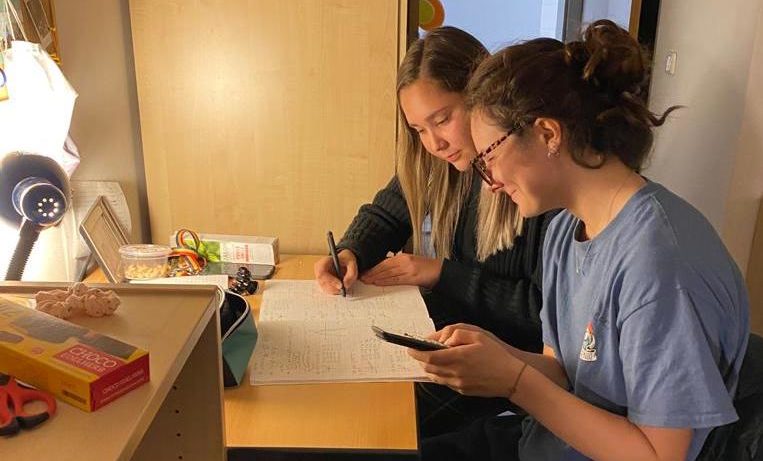
Photo: Resident Assistant Kathy (left), helping a student in study hall


Lacking dedication towards your schoolwork?

We have now established that there are plenty of opportunities to succeed at AIS-Salzburg for all students. However, students who decide not to take advantage of office hours will often find themselves on remediation, a program designed to help bring their grades up. Remediation can come in a number of forms, one being a mandatory, after-school, teacher or student-led tutorial. 

In summary, there are multiple ways for students to receive the help they need. Across the board at AIS-Salzburg teachers are willing to go that extra mile for their students, especially if their students are matching giving back that same effort in return. Therefore take note students and parents, that as we transition to online education once again as of November 16th, students will not be alone and teachers will once again make themselves available to go over and above for their students who are seeking that extra help and actively pursuing better academic results.


AIS-Salzburg student council were blessed with 20 degree weather on October 24th as they held a barbecue fundraiser to raise funds for student life projects around the school. Students, teachers and resident staff enjoyed a day of good food and fun in the sun.

“I am really excited about the Barbecue event. I believe it will be an amazing time grilling hot dogs and burgers for the students and watching them all uniting and playing games together. In my opinion, it is the best way to spend a Sunday,” said student body representative Ioannis S. just prior to the event.

One of the more popular fundraising micro events was soaking Ms. Baehler (red shirt) with water balloons!!

This school year we had enough interest from several students to hold an actual election for the four positions: President, Vice President, Treasurer and Secretary. As part of their campaigns, each candidate was asked to hold a 2-minute speech at one of our school’s hall meetings and then participate in a 5-minute Q&A. Some of the major questions from the student body dealt with day-to-day life, the student lounge and the various ways to counterbalance some restrictions in place due to CoVid19. All candidates did a tremendous job and should be proud of themselves for holding such great campaigns. 

In our first student council meeting post elections, students discussed the upcoming activities and fundraising events to help sponsor a school Halloween dance. Some of the proposed ideas were a bake sale as well as a gaming tournament with a buy-in of 5€. The student council also discussed the current community service opportunity ‘Operation Christmas Child’ as well as other opportunities available. On our agenda for next week, we will work on prioritizing a list of suggestions from students on ways to counterbalance this year’s changes due to CoVid19 as well as other weekend programming students can participate in. 

When did you attend Salzburg International Preparatory School (SIPS)? (changed to AIS-Salzburg in the 1990’s)

I went to SIPS from 1978-1980 along with my sister Janice Schiedel Koch


Where did you go to school prior to SIPS?

I went to Springbrook High School in Silver Spring, MD, USA.  I spent my entire childhood in Maryland and moving overseas and going to SIPS was my first time traveling and living internationally.  


What made you decide to study in a private school in Austria? How did you find out about the school? 

My father took a position at the Joint Economic Commission in Riyadh (through the U.S. State Department) and our entire family moved to Saudi Arabia.  At that time, there wasn’t an American school in Riyadh and one of my father’s colleagues, by the last name Deutsch, recommended SIPS to him. His son and daughter, Jayme, went to SIPS the previous year.


What did you enjoy about going to such a small, international high school? 

I really enjoyed getting to know my classmates. While most of the students were from the U.S. and Canada, many of the student’s parents also lived all over the world.   Therefore, it was interesting to learn of their experiences living in Iran, Malta, Jordan, Indonesia, Africa, Romaniaetc.   We also had students from Australia, Great Britain, Israel and Germany.   I learned so much about different cultures and experiences and it had a tremendous influence on my life.  


What was the student body nationality make-up back then?

Mostly American and Canadian students–about 50 to 60%.  


How many excursions did you go on in a year and to where? 

There were usually two to three big trips each year.  First year (1978-1979)  went to Vienna, Budapest, then Luzern & Zurich in the winter and Italy in the spring.   My second year (1979-1980), we went to Venice in October, Munich in November, Innsbruck in February and then Rome and Florence in April.  


Was skiing and team sports a big part of the program?

Yes, every Saturday, there were ski trips.   Team sports were not huge at that time, which I think was hard on some kids.  I took horseback riding lessons weekly and I absolutely loved it.   I could walk to the stables from school.   

What did a typical weekend look like and were there mandatory activities? 

We usually went skiing Saturday morning, and then we went to the pubs at night.  (this definitely doesn’t happen now!)


What are your fondest memories of attending SIPS? 

I enjoyed our international trips.   I especially enjoyed visiting Luzern, Switzerland as well as Italy (Venice, Florence and Rome).  I also very much loved Salzburg and having the freedom at a young age to hop on the bus and spend the day there.  I especially enjoyed going shopping along the Getreidegasse, visiting the cafes, bakeries and the Stiegel Keller.  


Do you have a particular teacher that impacted you the most or is strongest in your memory? 

Mr. Thomas Franklin was my favorite teacher.  I took his psychology class my senior year of high school.  He made the class fun and it didn’t seem like I was learning.  However, I learned so much, and I still remember some of the basics of psychology today.  


What have you done academically and professionally since graduating from SIPS?

My experience living in Salzburg and Riyadh changed my life.  In college at West Virginia University (WVU), I completed a double major International Studies and German.

During the summer of my junior year, I went back to Salzburg for a German class–it was a joint program with WVU and Southern Methodist University.  The classes were taken right next door to the Leopoldskron Palace and I stayed with an Austrian family that summer. 

Then I went to graduate school at The American University (AU) in Washington, DC and I completed an M.A. in International Affairs with concentrations in Western Europe and U.S. Foreign Policy.   While at AU, I took an internship at the Brookings Institution and enjoyed it very much.  I have worked at international and educational nonprofits ever since. 

My first full-time professional position was at the Center for Strategic and International Studies (CSIS) a prestigious international think tank in Washington, DC. I worked there for 8 years and was promoted three times.   

I have since worked at a number of nonprofits, including the U.S. Institute of Peace.  I am currently working at the Global Good Fund as a senior director of business development and partnership.   The Global Good Fund provides leadership development for social entrepreneurs from around the world.  


What aspects of your education at SIPS best assisted you in further academics, your professional life, and life in general? 

I learned to be very independent while at SIPS, which helped me tremendously in college and graduate school.   Living in Salzburg with an international study body taught me to respect different cultures and all types of personalities.  This was incredibly helpful in my career and personal life.  


Are there any personal accomplishments since graduating that you want to share? 

My husband, Steve and I have a daughter, Sara, who is a Sophomore in college at Virginia Tech.  She has a tremendous passion for international travel.  Sara speaks French and is now learning Arabic.  

Do you have any advice for current students at AIS-Salzburg (formerly SIPS) or applicants to the school? 

My advice is to embrace the wonderful opportunity to live and learn in Salzburg.  It is truly a once in a lifetime experience and take every opportunity to travel, ski and just spend time in the beautiful city of Salzburg.

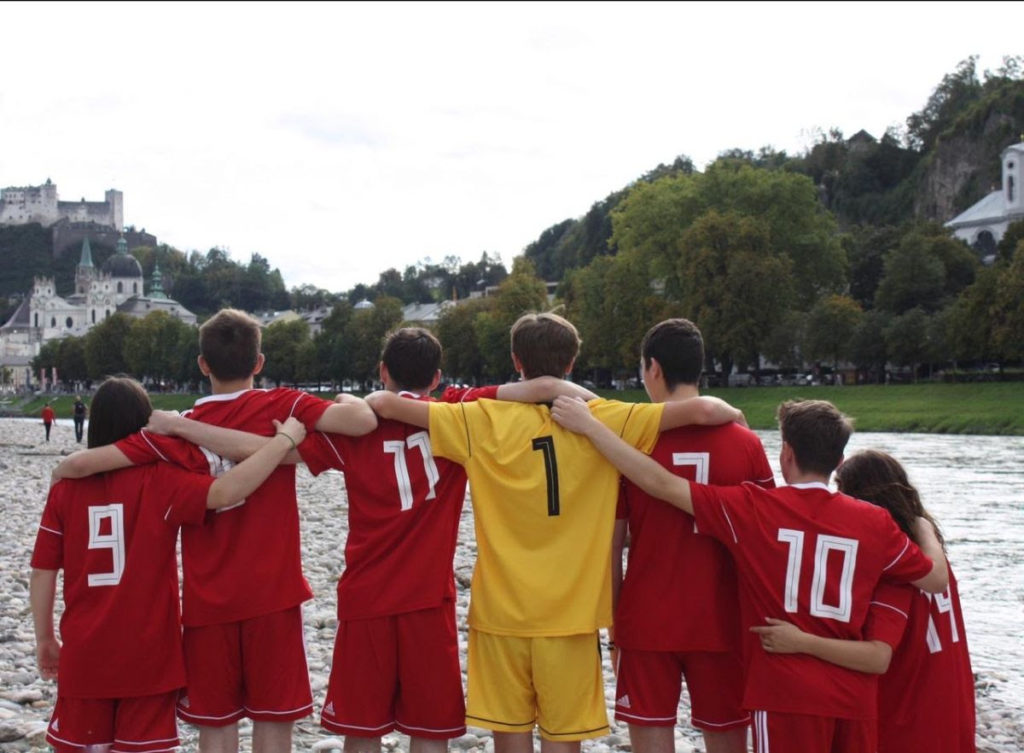
So far this season the school football team is looking like it is in good shape with the bulk of last year’s players returning and many new faces joining us. The squad is almost double the size of that of the previous year, and one of the largest the school has had in quite a few years.
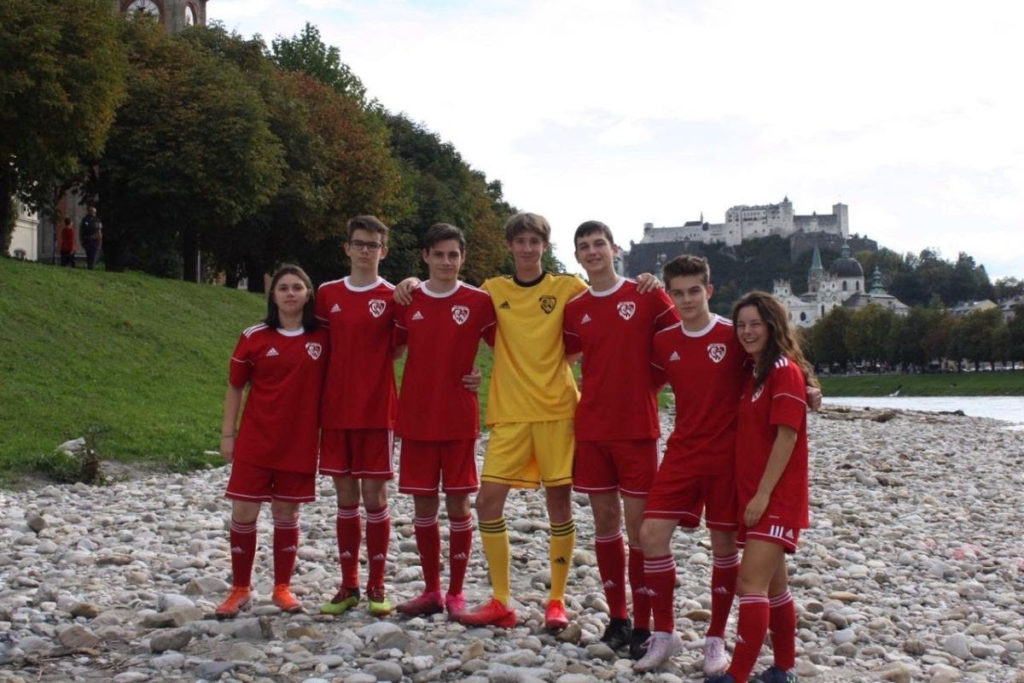
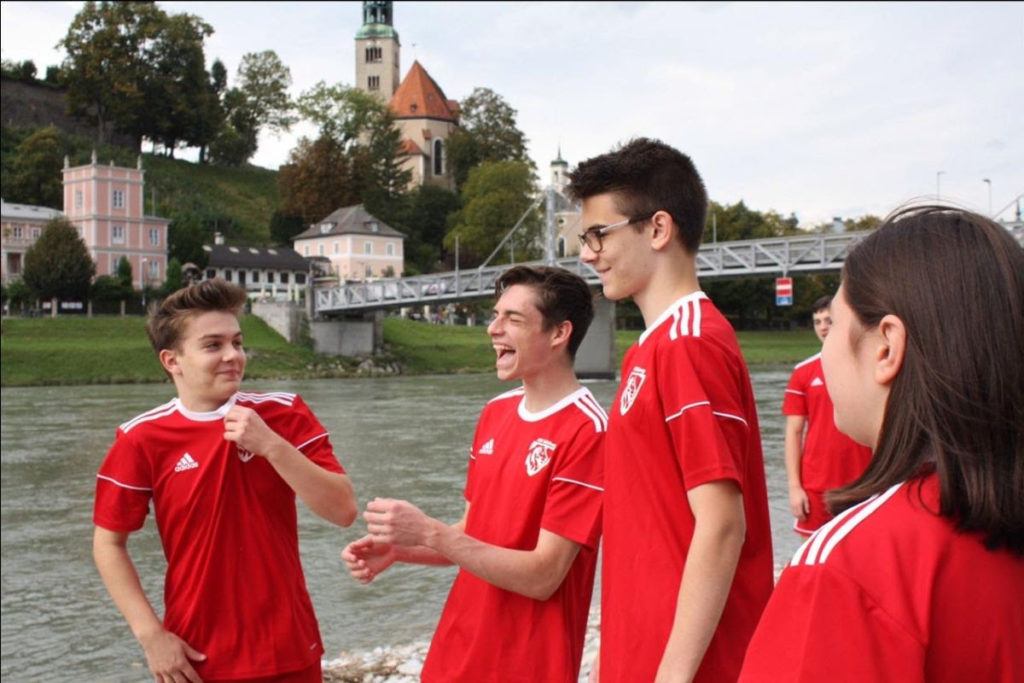
With football being a contact sport, and with the squad made up of a mixture of day and boarding students of various ages, the new ‘corona guidelines’ have meant everyone involved has had to adapt. Luckily the students have been very understanding that health should always come first, even if that means changing the way we train together.

With any chance of competitive matches being played looking highly unlikely until at least the spring, we have been trying to make the most of this time by concentrating on individual skills and learning to create space by moving off the ball. We are all looking forward to putting this to good use come springtime.

The video below is from two separate soccer practices in early October. 

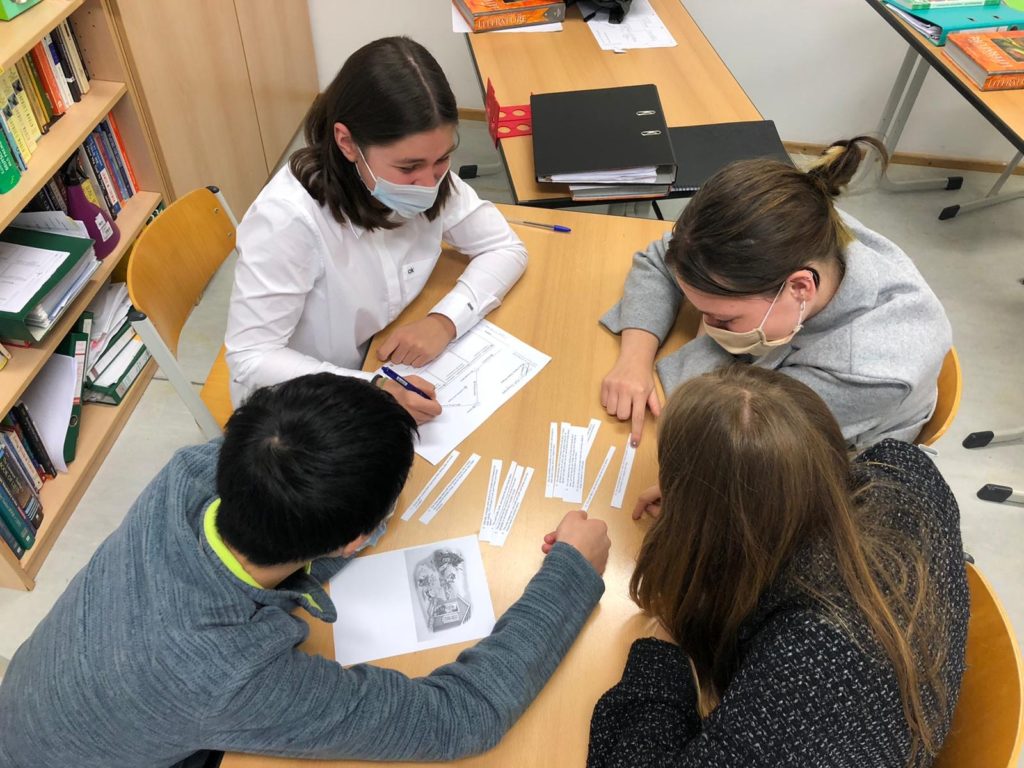
In 9th grade literature class, students worked on placing story events on the plot diagram. They had to first work to have a clear understanding of the main conflict in the story that builds the tension and moves the plot along. Then they looked back at the story to see where that conflict first appeared and also formed their interpretation of which scene was the climax of that conflict. In the photo below, they are working with a practice story, solidifying their understanding of the terms and improving their teamwork skills simultaneously.
In biology class this week, our grade 9 students were learning how to use the microscope by looking for microorganisms in pond water.

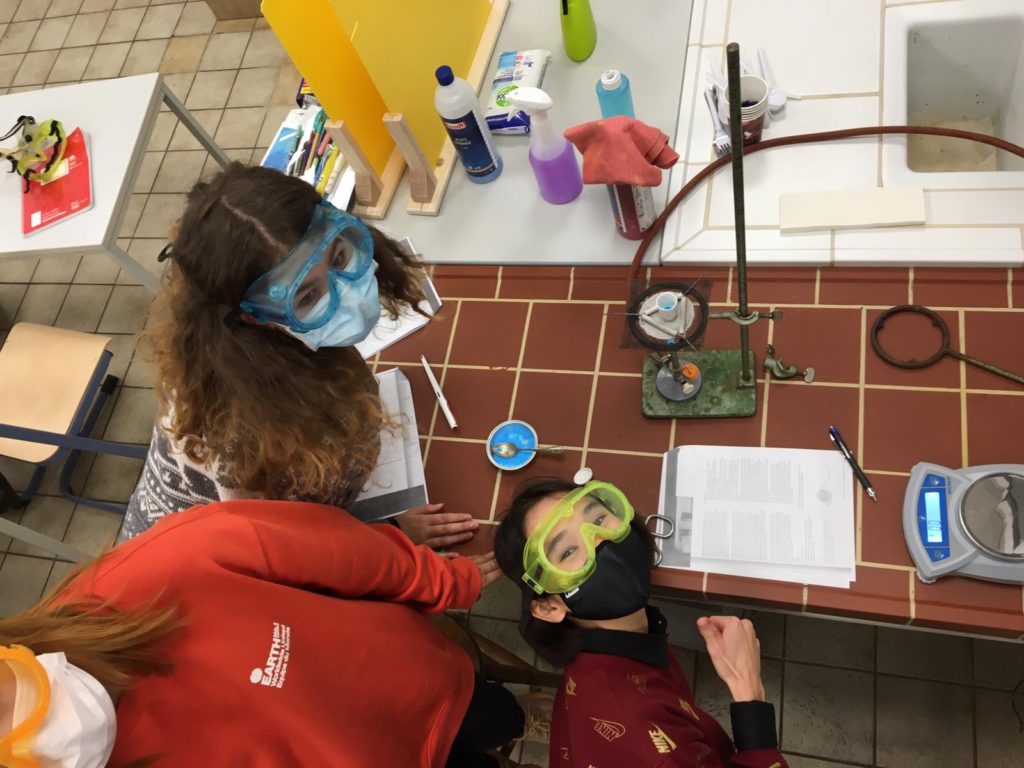
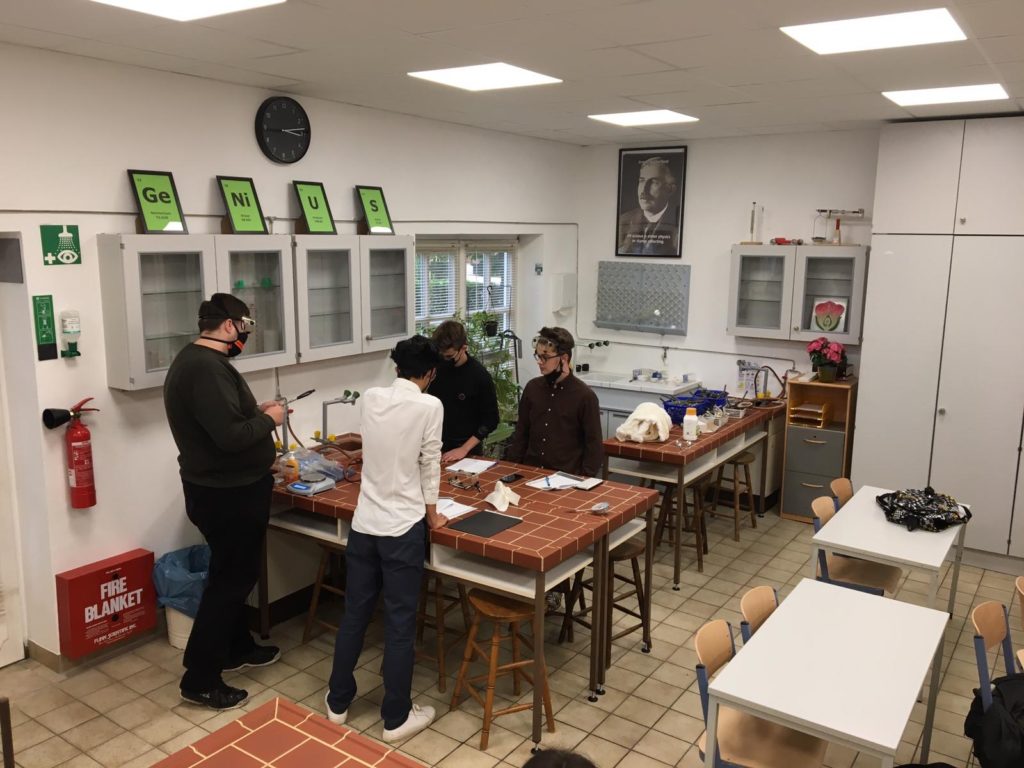
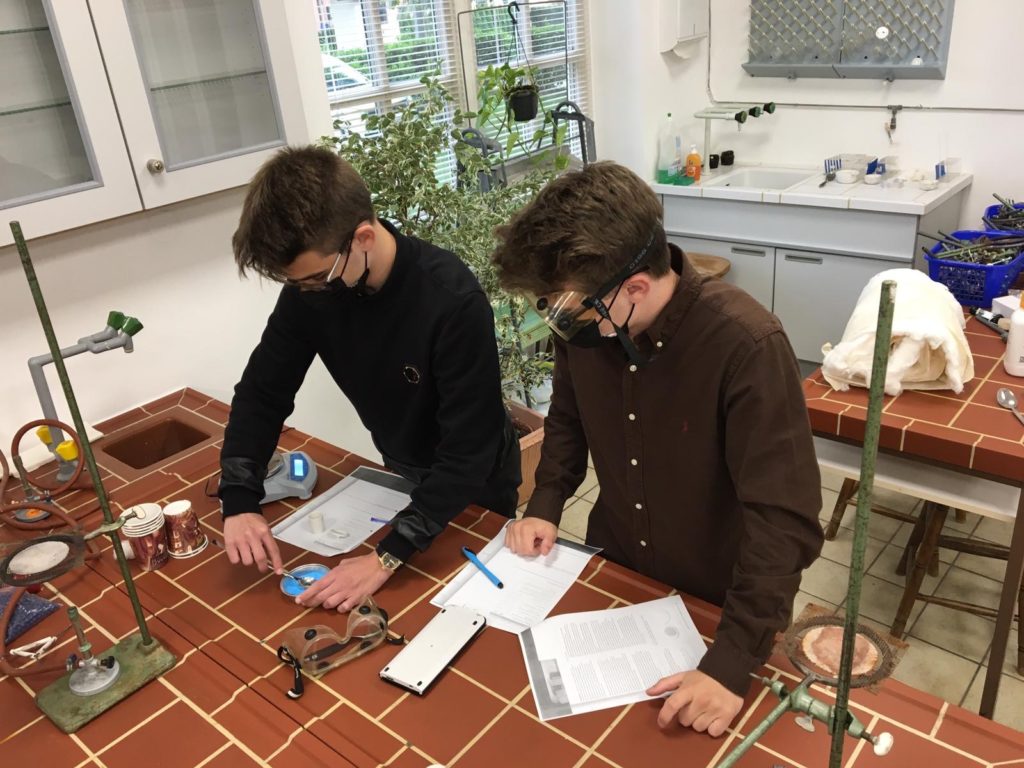
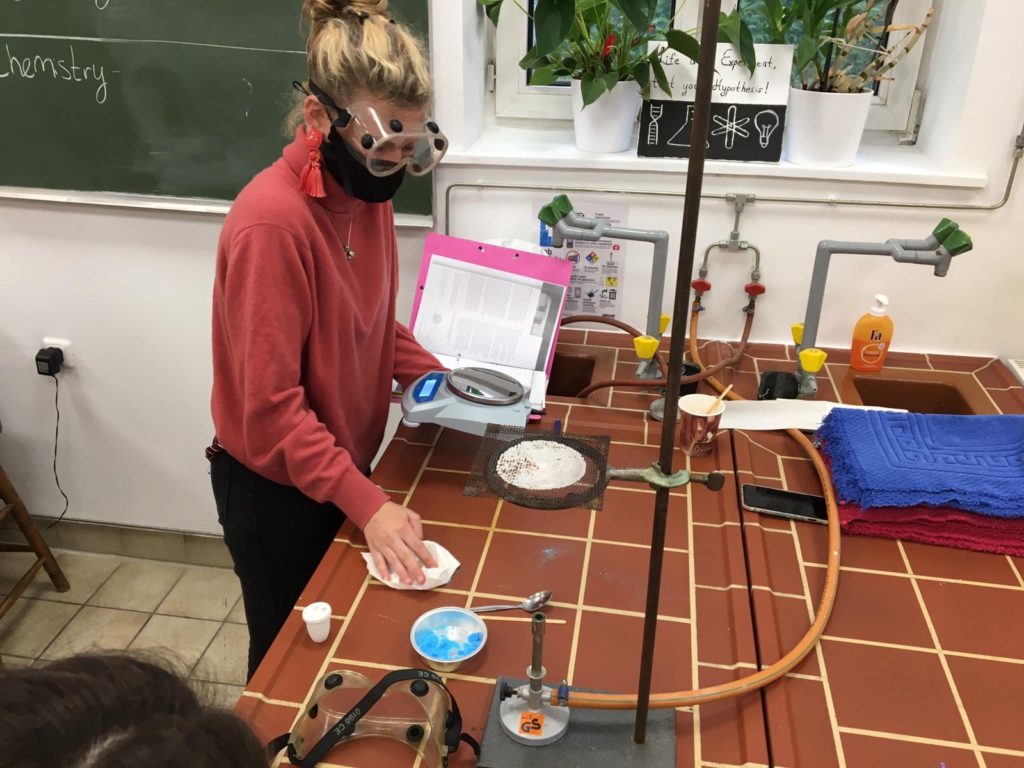
In chemistry class, 11th grade students heated a hydrated copper sulfate to drive off the water of crystallization and use the mass differential to determine how many molecules of water are associated with each molecule of hydrated copper sulfate. In hydrated form, the copper sulfate forms brilliant blue crystals; in anhydrous form, copper sulfate is a white powder.
As anyone who has attended or worked in a boarding school knows, free time on the weekends is very precious to boarding students. In this new video series, we have asked current students to show prospective new students what they do in their free time and where their favorite hangouts are in Salzburg.